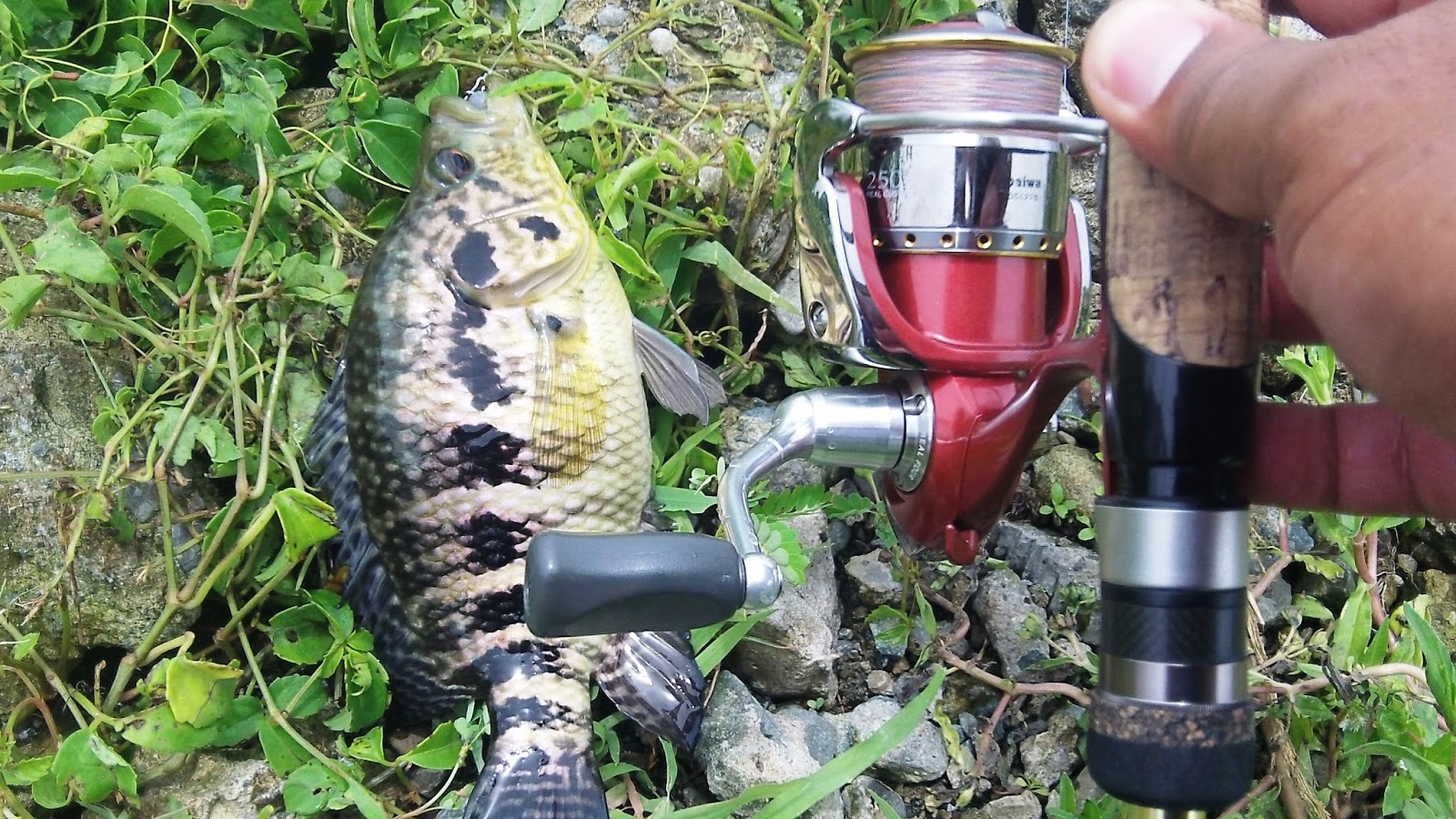
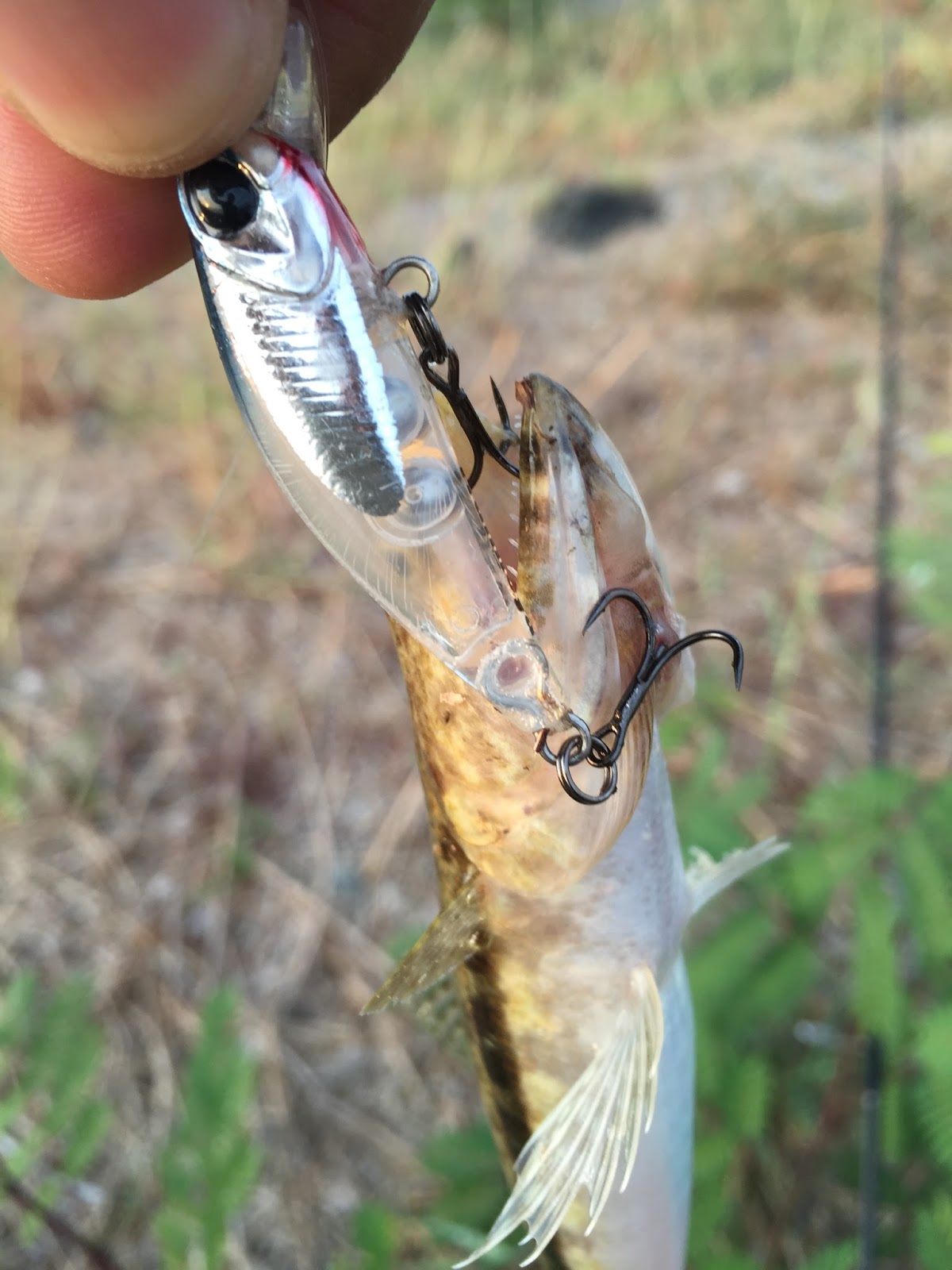
It was around 5 years ago when I started trying lure fishing --- also called by our Asian neighbors as luring. Luring, for the most part, is an enjoyable and fulfilling fishing style because of its effectiveness and the range of catches that can be had. And the best part is, you don't have to look for and bring stinky baits every time you go out.
But lately, catching fish from luring has gotten harder and harder. Probably because more and more bait fishers have adopted this new style and the competition to catch something from a very limited number of fishing holes has gotten fiercer. It could also be because our regular target species have gotten familiar with the lures that we are using and has learned to avoid them altogether. As a matter of fact, I can't remember the last time I caught something exciting using my regular plugs, jerkbaits, poppers using my trusted baitcasters. Even our favorite hole in Pantabangan for bass has shown significant decline (in catches). Perhaps the growing number of take-home anglers has depleted majority of the accessible holes. Probably there are not enough fish to go around.
With this, trying new fishing styles is now a necessity. One style that is growing in popularity is finesse or ultralight fishing. This style can be done in saltwater and freshwater holes. It's main feature is the use of very light line, tiny and shallow-spooled reels, and very light and thin rods- spinning and sometimes bait-finesse casting rods.
From what I understand, this style was made popular in Japan by Aji (horse mackerel) and Mebaru (rock fish) anglers. In the past couple of years or so, more and more anglers from all over the world have started using this style and for good reason. The barely visible line, the tiny lures, and extremely light rod are able to fool even the most wary of fishes -- small or big. The usual tough or pressured spots are able to produce catches that we can only dream of using traditional baitcasters and plugs. The setup is so versatile that you can use it for big queen fish, trevallies, squid, small rockfish, and my favorite Horse mackerel or Aji -- aka matambaka. And because the outfit is so light, fishing the entire day will not wear you out.
Line
The line that I use is 200 meters of PE 0.6. Some even go lower to PE 0.3, In terms of pounds, the general rule is PE 0.6 is equivalent to 6lbs while PE 0.3 is 3 pounds. But recently, that is not the case. Newer Japanese lines are now stronger than before. My PE 0.6 has a breaking strength of 12lbs. Japanese PE lines are recommended due to their smoothness, roundness, and strength. There are markings on the line spool x4 or x8 which means 4-weave and 8-weave PE. The 8-weave lines are considered rounder and smoother thereby giving improved casting distance and additional strength. In addition to the main line, I use 2-3 feet of 6-10lb flourocarbon leader. This leader is very crucial to entice wary predators to bite. Flourocarbon leaders are less visible when in water compared to mono.
Reel
The very fine PE line is usually spooled on a 2506, 2004, or 2508 spool (Daiwa) or 2000S, 2500S (Shimano) reels. These spools are considered shallow spools. For Daiwa reels, the xx06 means 100m of #6 Japanese mono, xx04 is 100m of #4 Japanese mono, and xx03 means 100m of #3 Japanese mono, and so on. Shallow spools are recommended to hold at least 150m of very fine PE line. Being shallow means the spool can provide extra casting distance for light lures as well as protection from wind knots. Another characteristic of shallow spools is the finesse drag usually just around 3lbs. If you open the drag stack inside a shallow spool, it normally contains one felt or carbon washer and another metal washer. This makes the drag ultra smooth and consistent. In UL or finesse fishing, this drag system is the key to ensure that the light line won't break when a big fish strikes.
Rod
The rods are around 7 to 8ft in length and are extremely light but surprisingly tough. It can throw lures weighing just a mere 2 grams and up to around 7 grams max. My personal choice of rods are the Aji or Mebaru rods. There are two types of Aji/Mebaru rods. The tubular and the solid tip. Rods with tubular tips are designed for plugs and lures while rods with solid tips are recommended for jigheads and bottom contact due to rod's extra sensitivity. Example of affordable rods are from Majorcraft. Daiwa has Gekkabijin rods and Shimano also have their own versions.
You can see the kind of rod based on the anotation on the model. In the example below, Majorcraft's KG Lights AJING series rod, the models with S are solid tips while the ones with T are tubular tips,
Lures
You can use either a floating or sinking pencil, diving UL plugs, tiny casting jigs, and even 1-inch plastic worms attached to a jighead. The lures range from 2 grams to 7 grams. The usual length is anywhere from 35mm to 55mm. Their size is their biggest advantage against the usual plugs and lures. When you cast these lures, they barely make a splash or noise when they hit the water. Less disturbance means lesser chance of spooking the fish. I was once with a fishing party in Subic. Most of the angers were casting 2-3 ounce-skip bunnies. They are what we call bombs because the amount of racket they make when they hit the water. At that time, there were around 5 local anglers casting the that rig. Every time their bunnies hit the water, they would naturally spook everything in the water. It's like throwing rocks to a school of fish and expecting them to bite. So there we were, watching the bombers doing their thing, waiting for our turn to fish After around an hour of casting without any bites, they stopped and packed their gears. Just before leaving one of them said "Nope, no fish here! It's a waste of time". After they left, we started fishing using our UL pencils. After a few minutes, we were landing big queenies one after the other.


My first exposure to this style was from Naks, Joseph, and Richie - members of the San Fernando anglers fishing group. Through the mentoring of our Japanese friend Naks, they have transitioned from traditional spinning and baitcasting outfit to the new finesse fishing (or sometimes called Ultralight UL fishing.). Intrigued by their success rate in saltwater or freshwater, I decided to join them in one of their outings. I was amazed by the sizes and variety of their catches considering they are using tiny rod and reel combos and throwing barely visible lures. They kept landing fish left and right. Right there and then, I decided that I have to get my own UL setup.